
Guide Β· E-mini vs micro futures

E-Mini vs. Micro Futures: Which to Start With

E-mini vs micro futures is the first sizing choice every new trader faces. The most common way beginners fail a prop firm evaluation is not a bad strategy. It is trading a contract that is too big for the account and their experience.
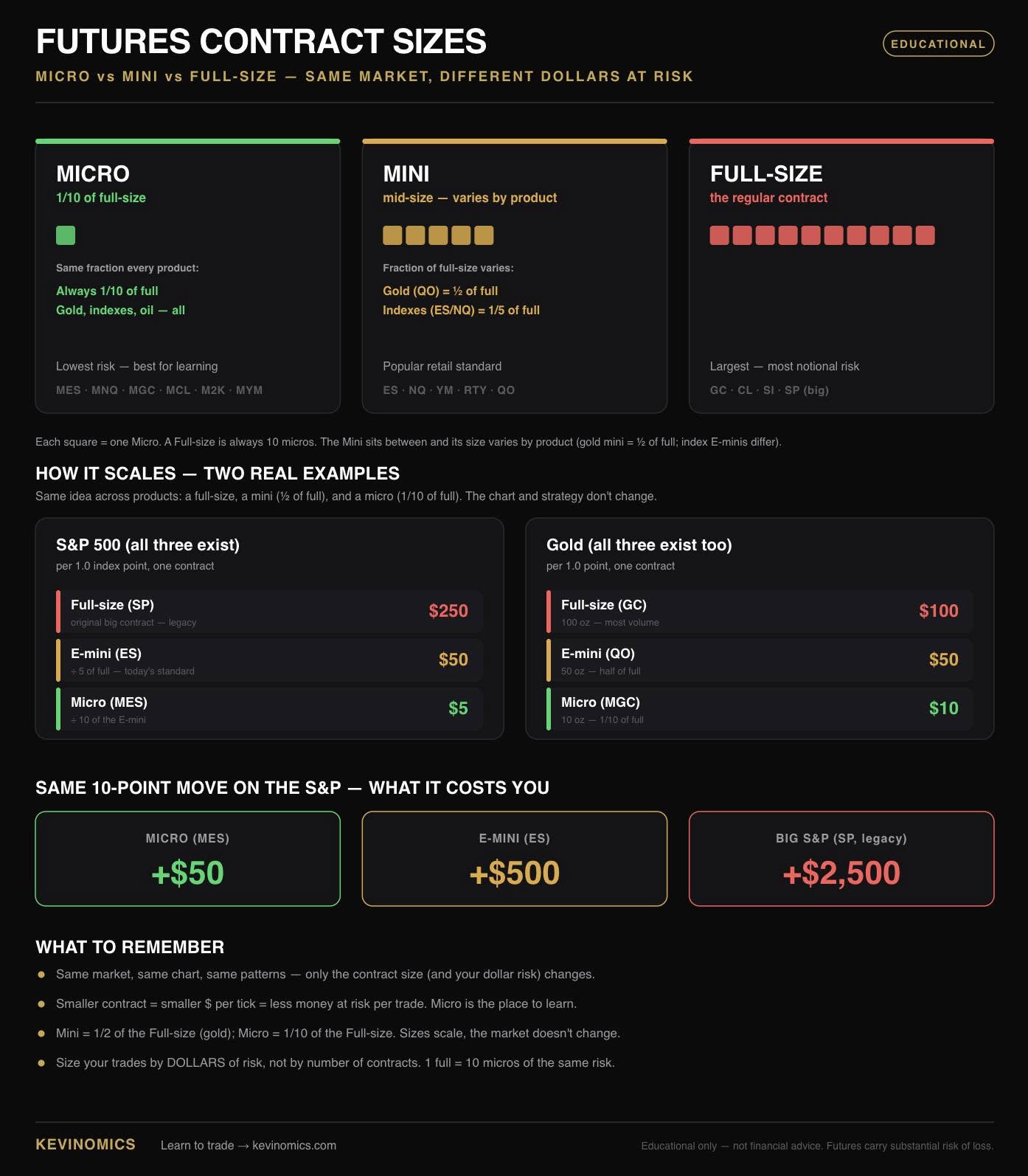
E-mini vs micro futures contract size comparison

The basics

What β€œE-Mini” and β€œMicro” Mean

Both are futures contracts on the same index. The E-mini S&P 500 (ES) and its Micro counterpart (MES) both track the S&P 500. The difference is size: one Micro is one tenth of one E-mini. Same market, same price action, one tenth the dollar risk per point.

Side by side

E-Mini vs Micro Futures Compared

E-miniMicro
Contract size$50 Γ— index (ES)$5 Γ— index (MES), one tenth
Move per pointLarger swings, larger P&LSmaller swings, smaller P&L
Best forFunded accounts with a track recordLearning execution and first evaluations
Drawdown riskHits daily loss limits fasterEasier to stay inside the rules

Sizing

Why Micros Make Sense First

Built for learning

Micros let newer traders practice order entry, stops and position management without one bad trade wiping out a real chunk of an account.

Room to be wrong

On a $50K evaluation with a $1,000 daily loss limit, a few E-minis moving against you can end it in minutes. Micros give you room to adjust.

Scale with proof

Move up only after a record of consistent, rules-following trades, not after one good week.

This is educational content, not financial advice. Futures trading involves substantial risk of loss. See the CME Group contract specs for current details.

Want a Plan Before You Trade?

Map your income, credit and next 12 months in a one-on-one session, or keep reading the free guides for creators.